Are you an environmental consultant?
EnviVault lists 398 environmental consultants. A free listing gives you a profile page and quote requests from people looking for environmental site assessment near you, sent straight to your inbox.
A vendor pitched me an “AI-powered environmental assessment platform” last year. Their demo was genuinely impressive — the thing could scan a Phase I report in seconds, pull out every REC, cross-reference regulatory databases, and spit out a summary that would have taken a junior consultant half a day to produce. I asked the sales rep what happened when the AI misread a historical Sanborn map and missed an underground storage tank. He smiled and said the consultant “reviews the output.”
Right. The consultant. The human. The one you’re still paying.
The Short Version:AI is already changing how environmental consulting work gets done — but it’s automating the paperwork, not the judgment. For high-stakes work like Phase I ESAs, lender due diligence, and contamination liability decisions, credentialed professionals aren’t going anywhere. The consultants who will struggle are the ones charging for time-consuming tasks that AI now handles in minutes.
Key Takeaways
- AI is compressing turnaround times dramatically — quote generation has dropped from days to hours at some firms
- Document processing, anomaly detection, and compliance monitoring are the highest-automation areas right now
- Phase I ESAs require professional judgment, site reconnaissance, and ASTM E1527-21 accountability that AI cannot provide
- The real threat isn’t job elimination — it’s fee compression as routine tasks stop justifying billable hours
What AI Actually Does Well in Environmental Consulting
Here’s what most people miss in the “will AI replace X” debate: the question isn’t whether AI can do the whole job. It’s whether AI can do the parts of the job that currently generate most of the hours.
In environmental consulting, those parts are significant.
Document processing is the clearest win. Environmental consultants spend enormous amounts of time extracting data from PDF-based site assessment reports — regulatory records, historical ownership chains, agency databases, prior Phase I findings. AI tools are now converting thousands of pages of unstructured documents into structured, searchable formats in the time it used to take to find the right folder.
Report writing and editing has also moved fast. Tools like Microsoft Copilot and ChatGPT are being used to summarize large document sets, simplify regulatory language, and draft client-ready sections. A strategic director at Partner Engineering & Science, Inc. put it plainly: “AI will likely be key in realizing efficiencies in report writing and field data collection for environmental consultants — freeing up valuable technical human resources to maximize report quality and customer experience.”
Real-time compliance monitoring is another genuine productivity leap. Instead of consultants manually comparing site data against regulatory thresholds, AI systems now flag potential issues automatically, enabling corrective action before they become agency notices.
Remote sensing and aerial analysis rounds out the list. AI-driven analysis of satellite and drone imagery can automatically identify construction activity, detect surface contamination patterns, and characterize site conditions that would require multiple site visits to assess manually.
None of this is hype. These applications are deployed, producing measurable results, and accelerating.
Where the Technology Genuinely Cannot Go
Reality Check:AI can summarize a Phase I report in seconds. It cannot sign one. That distinction is doing a lot of work in this industry.
Phase I Environmental Site Assessments exist within a specific legal and professional accountability framework. Under ASTM E1527-21, the report must be produced by an Environmental Professional — a defined credential category encompassing CHMMs, REPs, PEs, and PGs with documented expertise. The EP conducts records reviews, site reconnaissance, interviews with owners and occupants, and makes professional judgments about recognized environmental conditions (RECs).
An REC isn’t just a data point. It’s a professional opinion about whether a condition represents a potential release of hazardous substances that could affect the property. Lenders, buyers, and SBA underwriters are relying on that opinion to make significant financial decisions. If the assessment is wrong, there’s a credentialed human professional who is professionally and legally accountable.
AI doesn’t have a license to suspend.
Here’s a comparison of where AI is genuinely transforming the work versus where human expertise remains essential:
| Task | AI Capability | Human Still Required? |
|---|---|---|
| Extracting data from historical PDF records | High | For interpretation and judgment |
| Drafting report sections from structured data | High | For review, accuracy, and sign-off |
| Real-time compliance monitoring | High | For corrective action decisions |
| Aerial/satellite site characterization | High | For on-site reconnaissance |
| Identifying RECs in Phase I | Assistive | Yes — EP accountability |
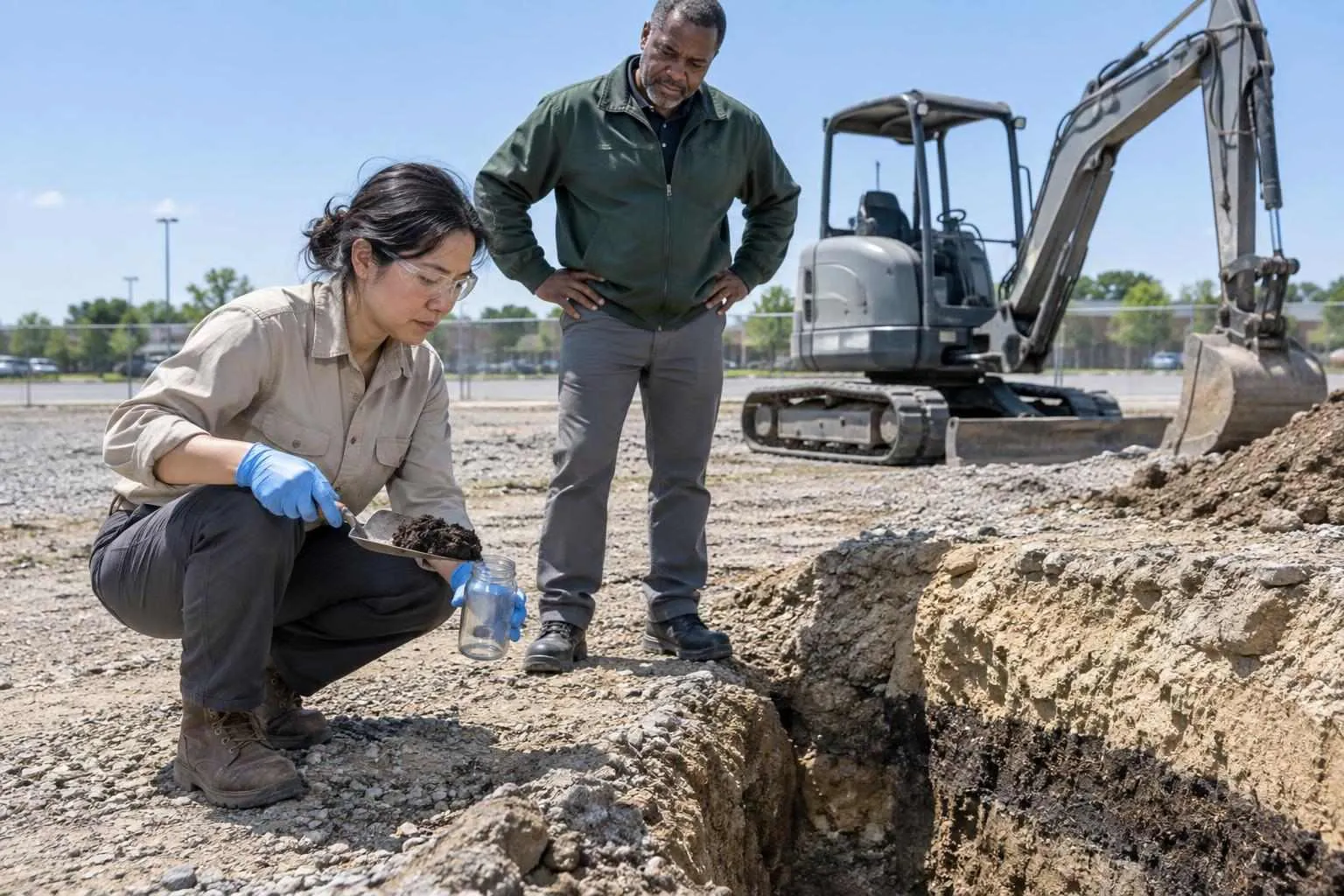
| Phase II soil/groundwater sampling | None | Yes — physical work |
| Client strategy and remediation planning | Low | Yes — relationship and judgment |
| Regulatory negotiation | None | Yes — expertise and advocacy |
The Fee Compression Problem Nobody’s Talking About
Pro Tip:If a significant portion of your billing comes from tasks that AI now compresses from days to hours, your pricing model needs to evolve before your clients figure out it can.
The real disruption in environmental consulting isn’t job elimination — it’s fee pressure on commodity deliverables. When quote turnaround drops from three days to three hours, clients notice. When document review that used to take 20 hours takes 2, that shows up in proposals.
Firms that are pricing based on effort for routine tasks will feel this first. Firms that are pricing based on expertise, judgment, and accountability have a more defensible position.
The consultants who will thrive are the ones who let AI absorb the grunt work and redirect their billable hours toward the analysis, strategy, and client relationships that actually require a human in the room. Or on the site.
The Honest Bottom Line on Where This Is Going
AI adoption in environmental consulting is still early. The technology is developing fast, but the gap between “AI can assist with this” and “AI can be accountable for this” remains wide — and in a heavily credentialed, liability-intensive field, accountability matters more than efficiency.
The industry consensus from early adopters isn’t doom and gloom. It’s a reallocation story: AI handles time-consuming routine work, consultants focus on higher-value technical analysis and client relationships.
What the optimistic framing sometimes glosses over: that reallocation will produce fewer billable hours per deliverable. That’s good for clients. It’s a real adjustment for firms.
For buyers of environmental consulting services — developers, lenders, SBA borrowers — this is unambiguously good news. Faster turnarounds, more consistent compliance monitoring, and consultants whose expertise isn’t being burned on data entry.
For consultants, the path forward is clear: get fluent with the tools, let them handle what they’re good at, and make sure your value proposition is anchored in the professional judgment that no platform can replicate.
Practical Bottom Line
If you’re hiring an environmental consultant: AI tools are making good consultants faster and more consistent. They’re not making inexperienced consultants credentialed. Verify credentials (CHMM, REP, PE, PG), not just software subscriptions. Start with The Complete Guide to Environmental Consultants to understand what the process actually involves before you engage anyone.
If you’re a consultant: The firms winning right now are using AI to compress document processing and reporting time, not to cut headcount. The opportunity is the same hours, better work. The risk is pricing Phase I deliverables as if the clock still says 2019.
The question to stop asking: “Will AI replace environmental consultants?”
The question worth asking: “Which consultants are using AI to do better work, and which ones are pretending it doesn’t exist?”
The answer to that second question will determine a lot about who’s still getting hired in five years.
Done reading? Get quotes from environmental consultants near you.
Takes about a minute. Free, no obligation; providers reply to you directly.
Popular cities:
Nick built this directory to help developers and lenders find credentialed environmental consultants without wading through firms that also perform remediation — a conflict of interest he encountered firsthand while navigating due diligence on a commercial acquisition.