Get free quotes from environmental site assessment near you
Takes about a minute. Free, no obligation; providers reply to you directly.
The report landed in my inbox at 4:47 PM on a Friday — 87 pages, no summary, and a Phase II conclusion that essentially said “some contamination, maybe address it.” The lender needed a clear answer by Monday. Nobody had told my client to ask for deliverables in a specific format. Nobody had told him what “acceptable” even looked like. He paid $14,000 for a document that raised more questions than it answered.
That experience is more common than it should be. Environmental consultants range from meticulous to mediocre, and the reports they produce are dense enough that most clients assume they’re getting quality work simply because they can’t read it fluently. You can do better.
The Short Version:Review environmental consultant work against ASTM E1527-21 standards for Phase I ESAs, use a structured checklist across five categories (records, permits, monitoring, documentation, site reconnaissance), and don’t accept a report that leaves recognized environmental conditions (RECs) unexplained or corrective actions unassigned. If you wouldn’t sign a contract with missing pages, don’t accept a report with missing sections.
Key Takeaways:
- Phase I ESAs should cost $2,000–$5,000; Phase II adds $10,000+ depending on site size — price outliers in either direction are a signal
- The most common compliance failure isn’t bad science — it’s missing or incomplete records
- A structured review pyramid (sub-categories → categories → review areas → overall quality) produces consistent quality judgments across reviewers
- Poor follow-up on findings is just as problematic as the findings themselves — every REC needs an owner and a deadline
The Five Buckets Everything Falls Into
I’ll be honest: environmental reports feel intimidating until you realize they all cover the same ground. Whether it’s a Phase I ESA for a strip mall or a compliance audit for a manufacturing site, the quality issues cluster into five categories. Build your checklist around these.
1. Records Review
This is where most problems hide. A consultant who skimmed the regulatory databases or skipped the historical aerial photo review will produce a Phase I that looks complete and isn’t.
| What to Check | Acceptable Standard |
|---|---|
| Regulatory database searches (federal + state) | ASTM E1527-21 minimum search distances by database type |
| Historical land use (aerials, Sanborn maps, city directories) | Coverage from earliest available to present |
| Chain of title / prior owner interviews | At minimum, identified and attempted |
| RECs listed with source citations | Every REC tied to a specific record or observation |
| Data gaps explicitly acknowledged | ”Not available” is acceptable; silence is not |
Here’s what most people miss: a consultant can technically satisfy the standard while still producing a shallow report. “Database search conducted” is not the same as “results analyzed for patterns.” Ask to see the raw database output alongside the report.
2. Permits and Discharges
Outdated permits are a top EPA violation category — and they’re embarrassingly easy to catch if you know to look.
Check that NPDES and state discharge permits match current operations. If the facility added a parking lot, expanded a loading dock, or changed drainage patterns, the stormwater map should reflect it. Site walks that verify outfall locations against permit drawings are non-negotiable for Phase II work.
Reality Check:A stormwater map that hasn’t been updated since the building was constructed isn’t compliance documentation — it’s a liability waiting to be discovered by someone less friendly than your consultant.
3. Monitoring and Testing
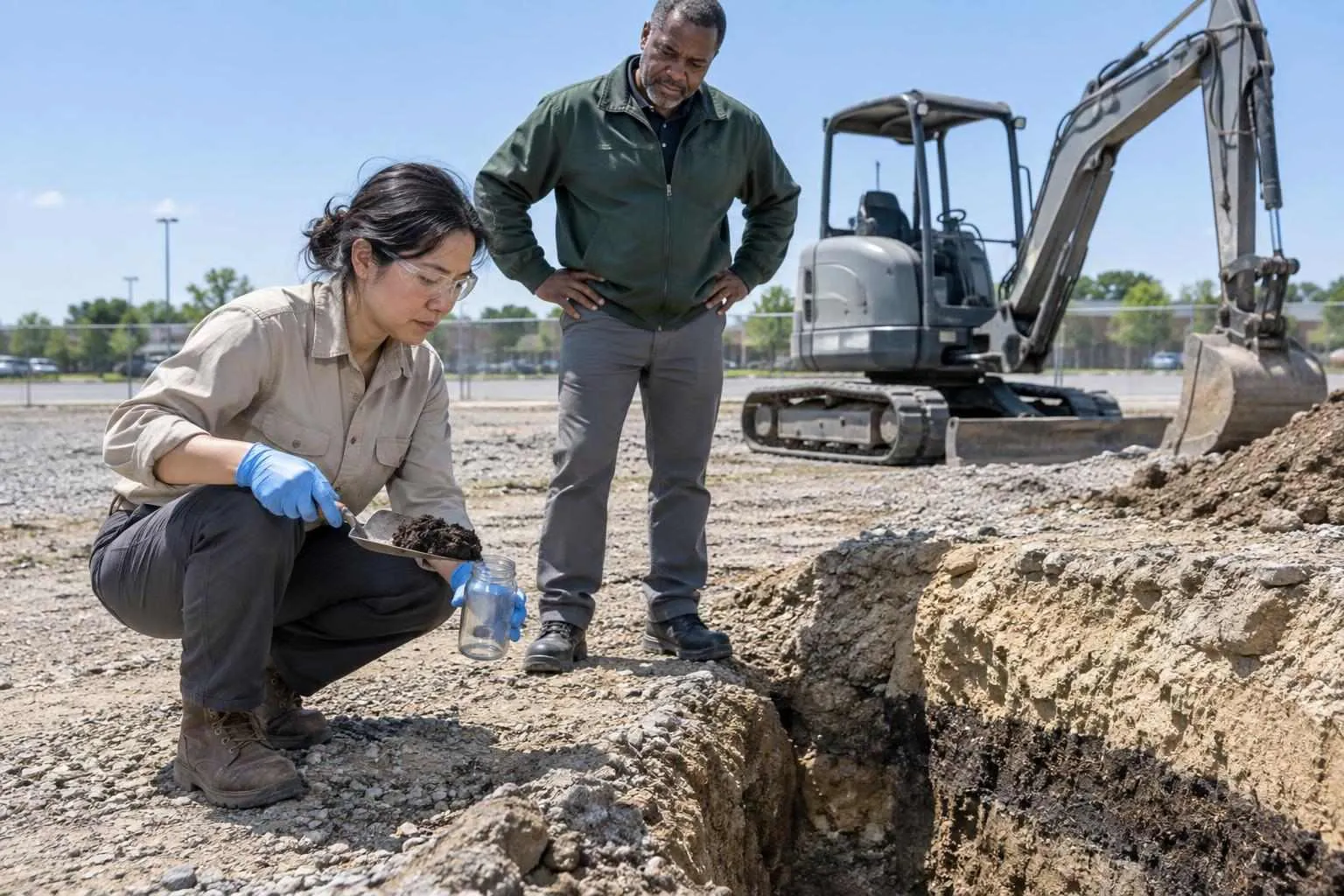
For Phase II work, lab results are the core deliverable. The chain-of-custody documentation is what makes them defensible.
- Sampling dates, lab receipt dates, and analysis dates should form an unbroken timeline
- Field blanks and duplicates should appear in the data tables — their absence suggests shortcuts
- Results should be compared against applicable cleanup standards (state residential vs. commercial thresholds matter)
- Anomalies in trend data — a spike, a sudden clean reading — need an explanation, not just a notation
If the consultant handed you lab results without a chain-of-custody form, ask for it before accepting the report.
4. Documentation Quality
EPA guidance on quality systems uses a “graded approach” — the level of QA/QC rigor should match the risk level of the project. A $50M acquisition warrants more documentation discipline than a routine annual audit.
What you’re looking for:
- Centralized, dated, accessible logs (not scattered across a consultant’s laptop)
- Internal interpretations of ambiguous regulations written down, not just discussed
- Corrective actions from prior reviews tracked to completion
- Staff awareness documented (a finding nobody acted on because nobody knew about it is still your liability)
Pro Tip:Ask the consultant to provide a corrective action log from any prior work on the site. If they can’t produce one, that’s data.
5. Site Reconnaissance
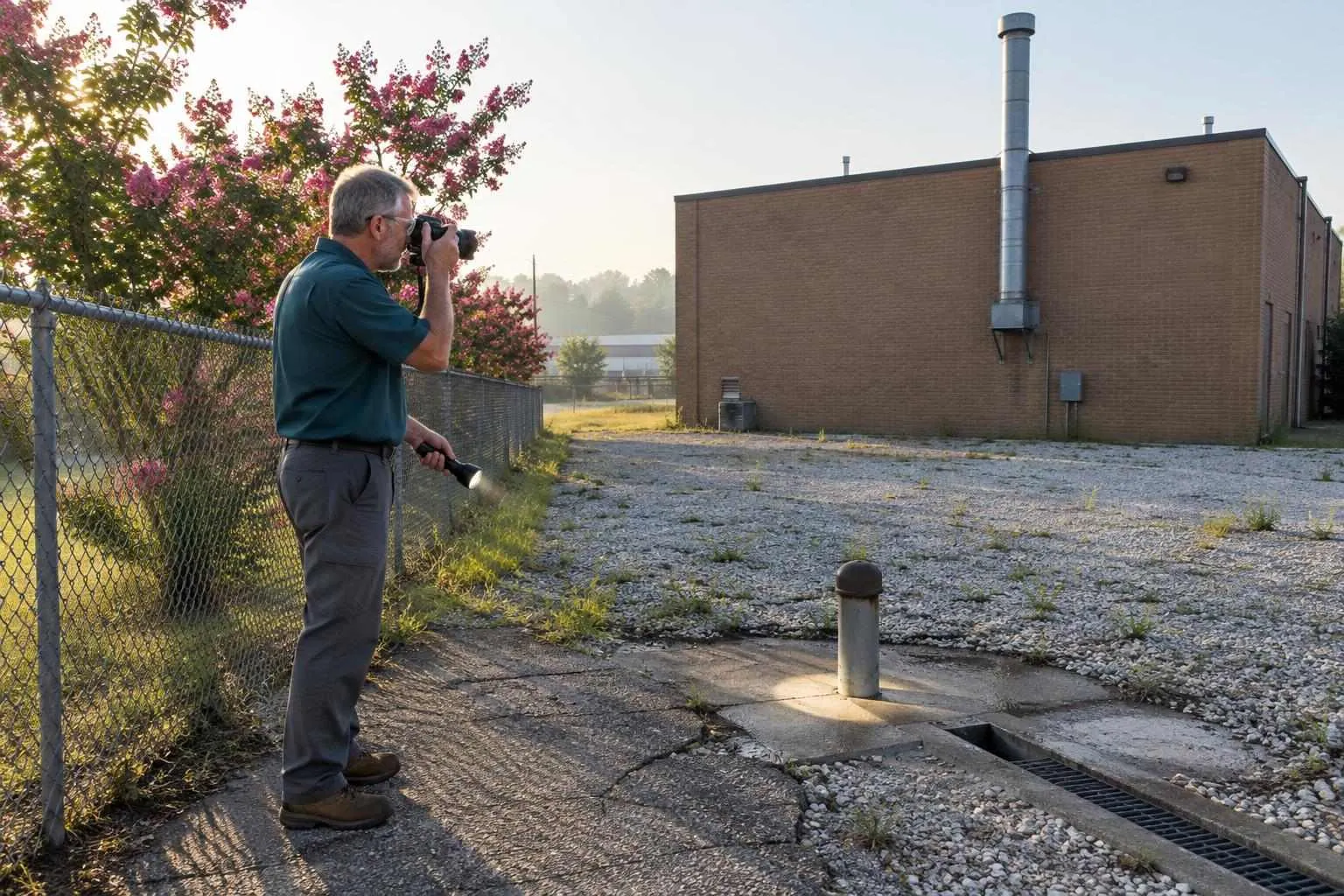
The site walk is where a good consultant earns their fee. Reports that rely entirely on database searches without physical verification are inadequate under ASTM standards.
Check the report against these questions:
- Do the maps match what the consultant actually observed on site?
- Are stormwater controls (berms, oil-water separators, catch basins) confirmed intact and functional?
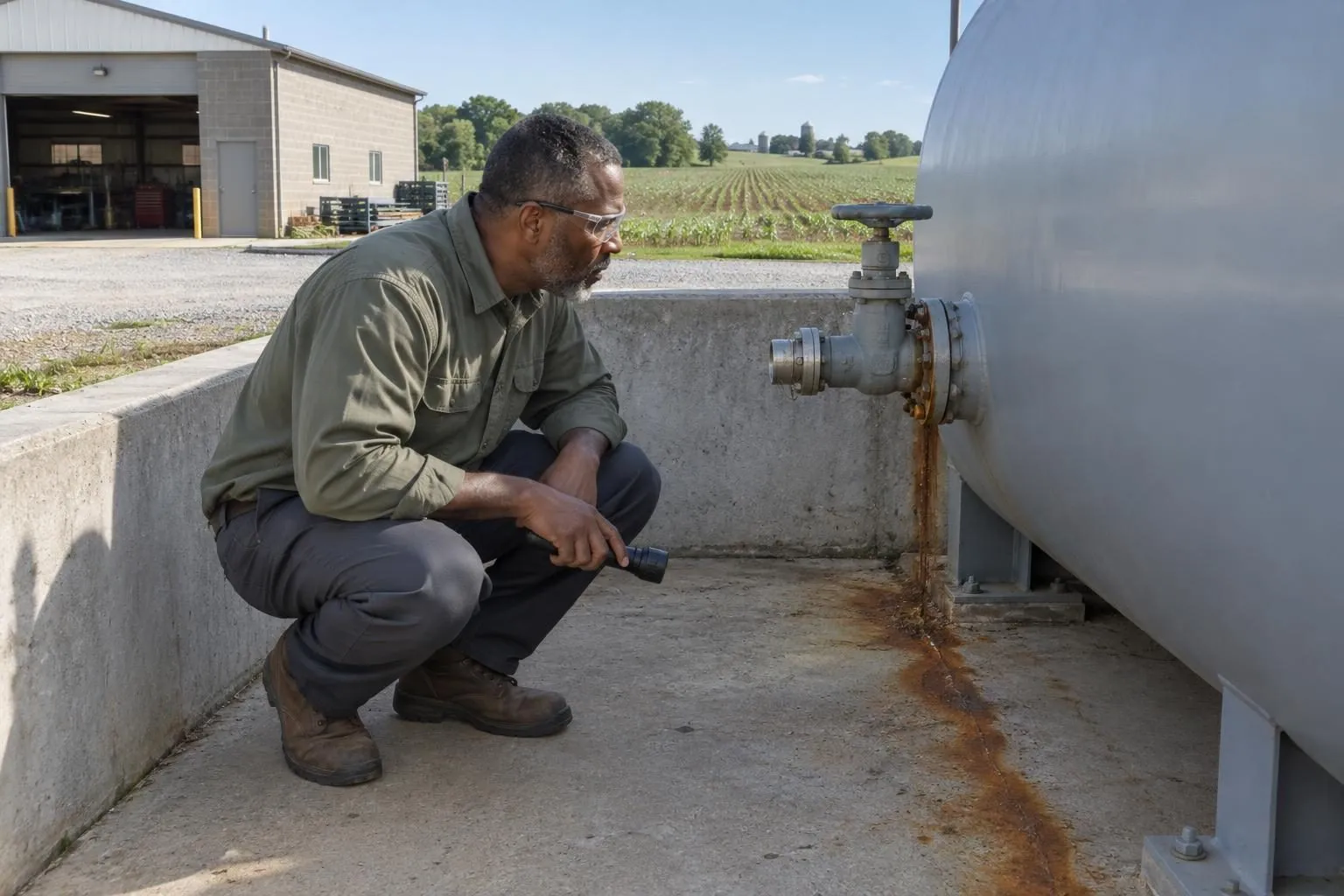
- Are there any observations of unauthorized discharges, staining, stressed vegetation, or unusual odors?
- Were adjacent properties assessed for potential off-site sources?
A consultant who describes a “clean” site walk without noting any of the above hasn’t told you anything useful.
The Review Pyramid in Practice
The EIA Centre’s review framework — validated across multiple site assessments — organizes quality review from specific sub-criteria up through overall adequacy. The practical takeaway: don’t jump straight to “is this report good or bad?” Work from the ground up.
Start with the specific findings (are the RECs clearly described?), move to category-level adequacy (is the records section complete as a whole?), then assess overall report quality. This produces consistent judgments — important if you’re comparing work from multiple consultants.
When to Request Re-Work
Not every gap warrants rejecting the report. Here’s a rough triage:
Request re-work immediately if:
- RECs are identified but not classified (the report flags contamination risk without recommending Phase II or explaining why Phase II isn’t needed)
- Lab results lack chain-of-custody documentation
- Permit status is listed as “unknown” without evidence of inquiry
- Corrective actions have no assigned owners or timelines
Flag for discussion if:
- Data gaps exist but are acknowledged and explained
- Site walk observations differ from historical records without reconciliation
- Recommendations are vague (“further study may be warranted”)
Accept with documentation if:
- Minor formatting or organizational issues that don’t affect findings
- Standard data gaps for records that genuinely don’t exist
Practical Bottom Line
Before you accept any environmental deliverable:
- Run the five-bucket checklist above — records, permits, monitoring, documentation, site recon
- Verify every REC has a source — no floating findings without citation
- Check chain-of-custody for all lab work — no exceptions
- Confirm corrective actions have owners and deadlines — findings without accountability are theater
- If something feels vague, ask — a quality consultant will have a direct answer; a mediocre one will send you more pages
For a broader look at what to expect from the engagement start to finish, see The Complete Guide to Environmental Consultants. If you’re evaluating consultant credentials before you even get to the report stage, the guide on certifications and what they actually mean will save you time.
The goal isn’t to become an environmental consultant yourself. It’s to be a client who can’t be handed a sloppy report without knowing it.
Done reading? Get quotes from environmental consultants near you.
Takes about a minute. Free, no obligation; providers reply to you directly.
Popular cities:
Nick built this directory to help developers and lenders find credentialed environmental consultants without wading through firms that also perform remediation — a conflict of interest he encountered firsthand while navigating due diligence on a commercial acquisition.